Rhinoplasty Surgery in Goa
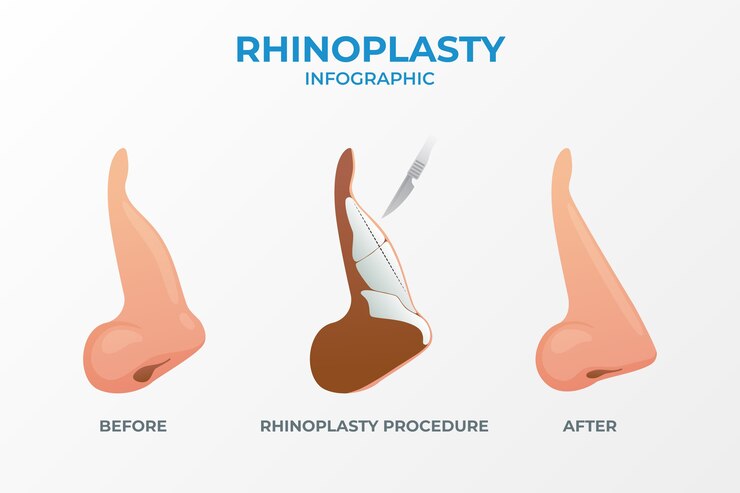
Rhinoplasty, commonly referred to as a “nose job,” is surgery to change the shape of your nose by modifying the bone or cartilage. Rhinoplasty is one of the most common types of plastic surgery. The motivation for rhinoplasty may be to change the appearance of the nose, improve breathing or both.
The upper portion of the structure of the nose is bone, and the lower portion is cartilage. Rhinoplasty can change bone, cartilage, skin or all three. Talk with our surgeon about whether rhinoplasty is appropriate for you and what it can achieve.
Ideal Candidate for Rhinoplasty
- Their current nose makes them self-conscious or unhappy.
- They may be unhappy with the way their nose has changed as they have gotten older.
- They have a deformity which needs correcting.
- They are well-adjusted and have reasonable expectations of the surgery. The best candidates want to improve the way they look, not look perfect. They are otherwise happy with their life and do not expect a nose job to change it significantly.
- They are the right age. While younger people do get nose jobs, it is best to wait until at least the mid-teens to get the procedure. The reason for this is that the nose stops growing and changing significantly at this age.
- They understand what is involved with the procedure and prepare for it accordingly. For example, workers will need to take time off after the surgery to recover.
- They are aware of any medical conditions and allergies they may have and have informed their surgeon. This reduces the risk of having a reaction to anesthetic and medications.
Have a Question ?
Reach out to know more details about the treatment.
Risks of Rhinoplasty
All surgeries carry some risks, including infection, bleeding, or a bad reaction to anesthesia. Rhinoplasty may also increase your risk of:
- breathing difficulties
- nosebleeds
- a numb nose
- an asymmetrical nose
- scars
Occasionally, patients aren’t satisfied with their surgery. If you want a second surgery, you must wait until your nose is fully healed before operating again. This may take a year.
Reasons for Rhinoplasty
People get rhinoplasty to repair their nose after an injury, to correct breathing problems or a birth defect, or because they’re unhappy with the appearance of their nose.
Possible changes that your surgeon can make to your nose through rhinoplasty include:
- a change in size
- a change in angle
- straightening of the bridge
- reshaping of the tip
- narrowing of the nostrils
If your rhinoplasty is being done to improve your appearance rather than your health, you should wait until your nasal bone is fully grown. For girls, this is about age 15. Boys might still be growing until they’re a bit older. However, if you’re getting surgery because of a breathing impairment, rhinoplasty can be performed at a younger age.
What nose reshaping involves
Nose reshaping is usually carried out under general anesthetic. Depending on the type of surgery you’re having, the surgeon may:
- Make your nose smaller (nose reduction) – by removing some of the cartilage and bone
- Make your nose larger (nose augmentation) – by taking cartilage from the ears and bone from the hips, elbow or skull, and using it to build up the nose (known as a “graft”)
- Change the shape of your nose (including the nostrils) – by breaking the nose bone and rearranging the cartilage
- Change the angle between the nose and top lip
- The skin over the nose should shrink or expand to its new shape.
The operation involves either making a cut across the skin between the nostrils (open rhinoplasty), or tiny cuts inside the nostrils (closed rhinoplasty). A closed rhinoplasty leaves no visible scars and causes less swelling, but is not always possible or available. The procedure can take 1.5 to 3 hours. You’ll probably need to stay in hospital for 1 or 2 nights. You’ll have a dressing on your nose for the first 12 hours after the operation, and a splint held over your nose with tape for 10 days. You may not be able to breathe through your nose for about a week.
You’ll be given painkillers to help control any pain or discomfort.