Scar Revision Surgery in Goa
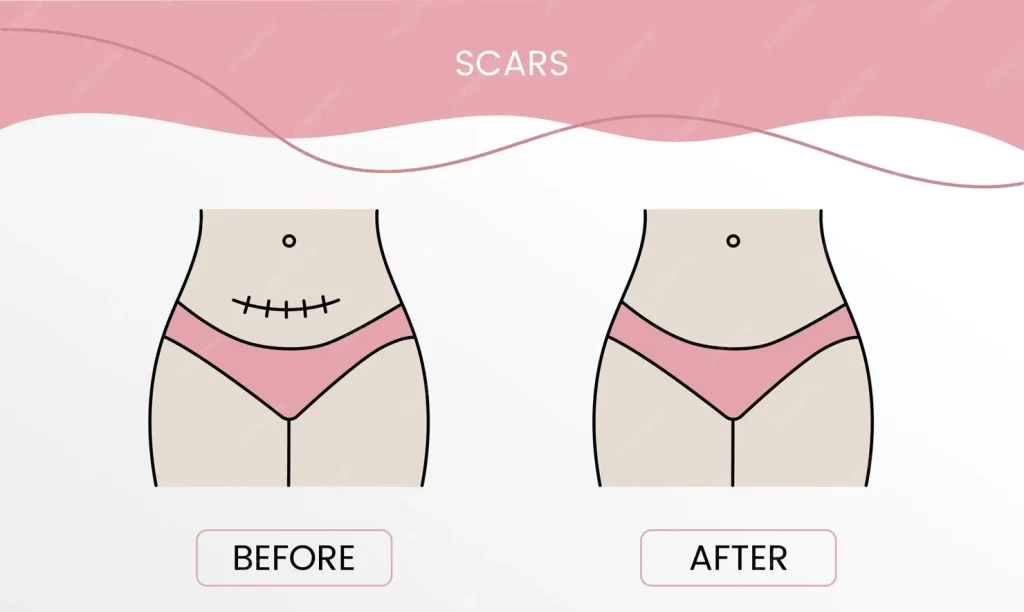
A scar revision is a procedure done on a scar to alter the appearance of the scar. The revision may improve the cosmetic appearance of the scar, restore function to a part of the body that may have been restricted by the scar, or improve an itchy scar. It is important to remember that all scars cannot be completely removed.
Types of scars and scar treatments
Keloid scars and scar tissue removal:
These are thick, rounded, irregular clusters of scar tissue that grow at the site of a wound on the skin, but beyond the edges of the borders of the wound. They often appear pink, red or darker in color, as compared to the surrounding normal skin. Keloids are formed from skin cells and connective tissue (fibroblasts) that begin multiplying to repair the damage. These scars may appear anywhere on the body, but more commonly on the face, neck, ears, chest, or shoulders. They occur more often in darker-skinned people. Keloid scars may occur up to one year after the original trauma to the skin. Treatment for keloid scars varies. There is no one simple cure for keloid scar removal. Recurrence after treatment is common. Treatment may include the following:
Steroid injections: Steroids are injected directly into the keloid scar tissue to help decrease the itching, redness, and burning sensations that these scars may produce. The injections help to decrease the size of the scar.
Cryotherapy: Cryotherapy involves the scar being “frozen” off by a medication (liquid Nitrogen). This treatment is often effective in conjunction with steroid injections for keloid scars.
Silicone gel sheet therapy: This preserves the scar surface moisture and allows it to soften. This needs to be worn for extended durations.
Pressure therapy: Pressure therapy involves a type of pressure appliance worn over the area of the keloid scar. These may be worn day and night for up to 4 to 6 months.
Surgery: If the keloid scar is not responsive to nonsurgical management options, surgery may be done. One type of surgery directly removes the scar formation with an incision, and stitches are placed to help close the wound. Sometimes, skin grafts are used to help close the wound. This involves replacing or attaching skin to an area that is missing skin. Skin grafts are done by taking a piece of healthy skin from another area of the body (called the donor site) and attaching it to the needed area.
laser surgery: Scars may be treated with a variety of different lasers, depending on the underlying cause of the scar. Lasers may be used to smooth a scar, remove the abnormal color of a scar, or flatten a scar. Most laser therapy for keloid scars is done in conjunction with other treatments, including injections of steroids, use of special dressings, and the use of bandages. Multiple treatments may be required, regardless of the initial type of therap
Ideal Candidate for Scar Revisions
- You are bothered by a scar anywhere on your body
- You are physically healthy
- You do not smoke
- You have a positive outlook and realistic goals for your scar revision surgery
- You do not have active acne or other skin diseases in the area to be treated.
Have a Question ?
Reach out to know more details about the treatment.
Hypertrophic scars
Hypertrophic scars are similar to keloid scars; however, their growth is confined within the boundaries of the original skin defect. These scars may also appear red, and are usually thick and elevated. Hypertrophic scars usually start to develop within weeks after the injury to the skin. Hypertrophic scars may improve naturally, although this process may take up to a year or more.
In treating hypertrophic scars, steroids may be the first line of therapy with this type of scar, although there is not one simple cure. Steroids may be given as an injection or by direct application. These scars may also be removed surgically. Often, steroid injections are used along with the surgery and may continue up to 2 years after the surgery to help maximize healing and decrease the chance of the scar returning.
Contractures
Contractures are an abnormal occurrence that happens when a large area of skin is damaged and lost, resulting in a scar. The scar formation pulls the edges of the skin together, causing a tight area of skin. This can also occur as scars heal. The decrease in the size of the skin can then affect the muscles, joints, and tendons, causing a decrease in movement. There are many different surgical treatment options for contractures. Some of which may include the following:
- Skin graft or skin flap for contractures: Skin grafts or skin flaps are done after the scar tissue is removed. Skin grafts involve replacing or attaching skin to a part of the body that is missing skin. Skin grafts are performed by taking a piece of healthy skin from another area of the body (called the donor site) and attaching it to the needed area. Skin flaps are similar to skin grafts, where a part of the skin is taken from another area, but with the skin flaps, the skin that is retrieved has its own blood supply. The section of skin used includes the underlying blood vessels, fat, and muscles. Flaps may be used when that area that is missing the skin does not have a good supply of blood because of the location or because of damage to the vessels.
- Tissue expansion for contractures: Tissue expansion is a newer technique being used for scar treatment, and involves a process that increases the amount of existing tissue available for reconstructive purposes. This procedure is often used in addition to the flap surgery.
Risks of Botox
Botox injections are relatively safe when performed by an experienced doctor. Possible side effects and complications include:
- Pain, swelling or bruising at the injection site
- Headache or flu-like symptoms
- Droopy eyelid or cockeyed eyebrows
- Crooked smile or drooling
- Eye dryness or excessive tearing
Although very unlikely, it’s possible for the toxin in the injection to spread in your body. Call your doctor right away if you notice any of these effects hours to weeks after receiving Botox:
- Muscle weakness
- Vision problems
- Trouble speaking or swallowing
- Breathing problems
- Loss of bladder control
Doctors generally recommend against using Botox when you’re pregnant or breast-feeding. And Botox should not be used in people who are allergic to cow’s milk protein.
How you prepare
Tell your doctor if you’ve had any type of Botox injection within the past four months. Also tell your doctor if you take muscle relaxants, sleeping aids or allergy medications. If you take blood thinners, you may need to stop taking them several days before your injection to reduce your risk of bleeding or bruising.
Lorem ipsum dolor sit amet, consectetur adipiscing elit. Ut elit tellus, luctus nec ullamcorper mattis, pulvinar dapibus leo.
Before the procedure
Most people don’t feel much discomfort during the procedure. But you may want your skin numbed beforehand, especially if your palms or soles are being treated for excessive sweating. Your doctor might use one or more of various methods available to numb the area, such as topical anesthesia, ice and vibration anesthesia, which uses massage to reduce discomfort.
During the procedure
Botox injections are usually performed in a doctor’s office. Your doctor uses a thin needle to inject tiny amounts of botulinum toxin into your skin or muscles. The number of injections needed depends on many factors, including the extent of the area being treated.
After the procedure
Do not rub or massage the treated areas for 24 hours. This may help prevent the toxin from spreading to a different area. You can return to your normal activities right after the procedure.